· 11 min read
Best Fitness Apps for Women Over 40 in 2026

Colin Raney
Co-founder & CEO of Ray, NASM-CPT · Evidence reviewed September 29, 2026
The best fitness app for women over 40 is the one that helps you build strength without making every workout feel intimidating, complicated, or impossible to fit into real life. For most returning exercisers, that means a clear plan, calm coaching, flexible workout lengths, adjustments when you report soreness or low energy, and enough instruction to feel confident at home or in the gym.
Our pick for most women over 40 is Ray because it acts more like an adaptive personal trainer than a class library: it builds your week, coaches you by voice, and adjusts around your time, equipment, soreness, energy, and feedback. Ray learns from each workout, your feedback, preferences, and performance, so the guidance keeps changing with you. Choose Sweat if you prefer a fixed library of women-focused programs and classes. Choose Apple Fitness+ or Peloton if you prefer polished classes and recommendations, and Future if you want a remote human coach and can justify the higher monthly price.
That recommendation comes with an obvious disclosure: Ray is our product. We still think this page is more useful if it is fair. The right app depends on whether you want coaching, classes, accountability, strength progression, or a human relationship.
Try Ray free for 1 week if you want a low-intimidation strength plan that adapts around your life.
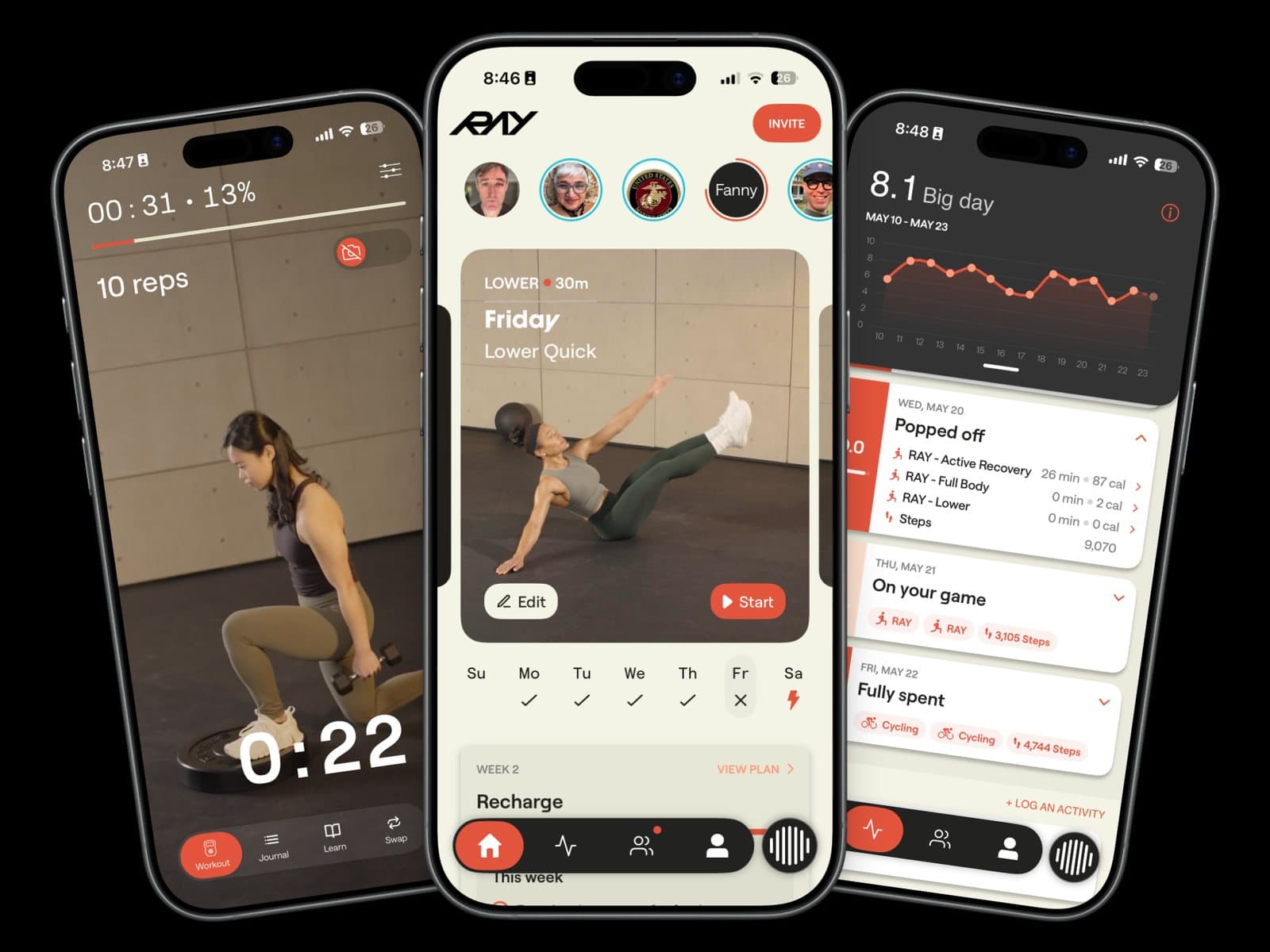
Ray combines guided workouts, weekly planning, and progress tracking so strength training feels easier to start and easier to keep doing.
Quick comparison: best fitness apps for women over 40
App | Best for | Why it fits women over 40 | Not for |
|---|---|---|---|
Ray | Adaptive strength coaching without intimidation | Ray gives you a plan, talks you through workouts, adapts to your time and equipment, and learns from your feedback, preferences, and performance to shape later training. | People who mainly want celebrity-style studio classes. |
Sweat | Prebuilt women-focused workout content | Sweat offers women-focused workout content and fixed programs. Its announced Perimenopause Strong program is scheduled to launch October 6, after this review date. | Anyone who wants the app to learn from each workout and keep adapting what comes next. |
Apple Fitness+ | Apple Watch users who like polished classes | It offers polished follow-along workouts, Custom Plans, and recommendations based on the activities, trainers, durations, and music you prefer. | People who want a strength coach that responds to ordinary workout feedback during the session. |
Peloton App | Instructor motivation and class variety | Peloton combines instructor energy with personalized recommendations, progress tracking, and tools for planning a routine. | People who want the day’s strength workout rewritten through a coaching conversation. |
Future | Human-coach accountability | Future gives you a real coach relationship, which can be valuable if you want someone checking in. | Budget-conscious users or people who want instant AI flexibility instead of a premium coaching service. |
Best fitness apps for women over 40, compared by coaching model, fit, and tradeoffs.
How we evaluated these apps
We evaluated these apps for women who are roughly 40 to 50 and returning to fitness, getting curious about strength training, navigating busy work or family lives, or trying to feel more confident in the gym. Some may be thinking about perimenopause, menopause, recovery, body composition, or longevity. But we did not assume weight loss is the goal.
The baseline matters: the CDC adult activity guidelines recommend muscle-strengthening activities at least two days per week, and ACSM summarizes similar adult strength and aerobic activity guidance. For this audience, the winning app is not just the one with the biggest library. It is the one that makes strength training easier to start and easier to continue.
- Does the app make the next workout obvious?
- Does it support strength training without aggressive “grind” language?
- Does it learn from your workouts and feedback, or is the plan still fixed when your time, equipment, confidence, or energy changes?
- Does it work for home and gym sessions?
- Does it provide enough guidance to reduce intimidation?
- Is pricing and platform information available from official sources?
Price and official source snapshot
Prices change, so use this as a dated U.S. snapshot and verify before buying. We checked official product pages on September 28, 2026.
App | Price/platform note | Official source |
|---|---|---|
Ray | $19.99/month, with a 7-day free trial. | |
Sweat | $24.99/month or $134.99/year on Sweat’s U.S. web signup page, with a 7-day trial for new customers. | |
Apple Fitness+ | $9.99/month or $79.99/year in the U.S. Apple One bundle options are also available. | |
Peloton App | App One is $12.99/month and App+ is $28.99/month in the U.S. Class access differs by tier. | |
Future | Future listed $50 for the first month, then $199/month when checked. |
U.S. pricing and official source links checked September 28, 2026.
1. Ray: best for adaptive strength coaching without intimidation
Ray is the best fit if you want a personal-trainer-like experience without feeling watched, judged, or forced into a program that ignores your actual life. You can set up a plan, put in your earbuds, and have Ray guide you through the workout by voice. That matters when you are returning to strength training and do not want to stand in the gym wondering what to do next.
Ray is especially strong for women who want to lift weights but feel unsure about getting started. Its advantage is not a women-over-40 label pasted onto a static plan. Ray learns from each workout, your feedback, preferences, and performance, then uses that context to evolve your training. If your time shrinks, your equipment changes, or you report soreness or low energy, Ray can adjust the session without asking you to abandon the plan.
- Best for: returning exercisers, busy women 40+, low-intimidation strength, home-to-gym flexibility, and adaptive coaching.
- Not for: people who mainly want a large studio-class video library.
- Standout feature: Ray programs your week, coaches you by voice, learns what works for you, and evolves later training.
2. Sweat: best for prebuilt women-focused workout content
Sweat is a polished workout library marketed to women. At the time of this review, its Perimenopause Strong program had been announced for October 6 but was not yet available in the app, so we have not treated it as a tested experience. What Sweat has published describes an 18-week at-home content plan with an optional six-week Foundations block, two or three 20- to 40-minute strength sessions each week, and exercise substitutions.
That may suit someone who wants a fixed program and does not need the app to keep learning. But a perimenopause label is not the same thing as adaptive coaching. Sweat’s official material describes planned workouts and substitutions. It does not describe a system that learns from each workout, your feedback, preferences, and performance, then evolves the training around you. Ray is designed to do that. Neither app should be treated as medical care or symptom treatment.
- Best for: women who want prebuilt women-focused workout content.
- Not for: people who want real-time adjustment or voice coaching through every set.
- Watchout: make sure the program style matches your current confidence level, not just your goal.
3. Apple Fitness+: best for Apple Watch users who like classes
Apple Fitness+ is polished, friendly, and easy to recommend if you enjoy follow-along studio workouts. Apple lists 12 workout types, including Strength, HIIT, and Yoga, and you can use Fitness+ from an iPhone without an Apple Watch.
Apple now offers Custom Plans and recommendations based on activities, trainers, durations, and music you prefer. That is useful personalization, but it is still a different experience from telling a coach you are short on time or low on energy and having the strength session changed around that feedback.
- Best for: Apple Watch users, studio-class fans, and people who want a broad library.
- Not for: people who want adaptive strength programming.
- Watchout: a great class can still leave you deciding what to do next week.
4. Peloton App: best for instructor energy and motivation
Peloton is a strong fit if instructors, music, and the feeling of joining a class help you show up. Both app tiers include unlimited strength, yoga, and floor workouts, while cardio-equipment access differs by tier.
Peloton also offers personalized recommendations, progress tracking, and tools for planning a routine. You still choose and schedule classes rather than working through a live coaching conversation, so the better choice depends on whether instructor energy or adaptive guidance removes more friction for you.
- Best for: people who love instructor-led workouts and class variety.
- Not for: people who freeze when faced with too many options.
- Watchout: make sure the intensity and tone feel encouraging, not exhausting.
5. Future: best for human accountability
Future is the best option here if you specifically want a human coach relationship. A real person can understand context, check in, encourage you, and help you feel accountable. For some people, that relationship is worth paying for.
The tradeoff is cost and flexibility. When checked on September 28, 2026, Future’s homepage listed $50 for the first month, then $199/month. That is a very different decision than a lower-cost app or AI trainer. Future may be worth it if human accountability is the thing you need most. It is probably not the first place to start if your main goal is a flexible, low-friction strength routine.
- Best for: people who want a human checking in and can afford premium coaching.
- Not for: people who want adaptive software instead of a human coaching relationship.
- Watchout: decide whether you need a human relationship or a trainer-like system that is always available.
What women over 40 should look for in a fitness app
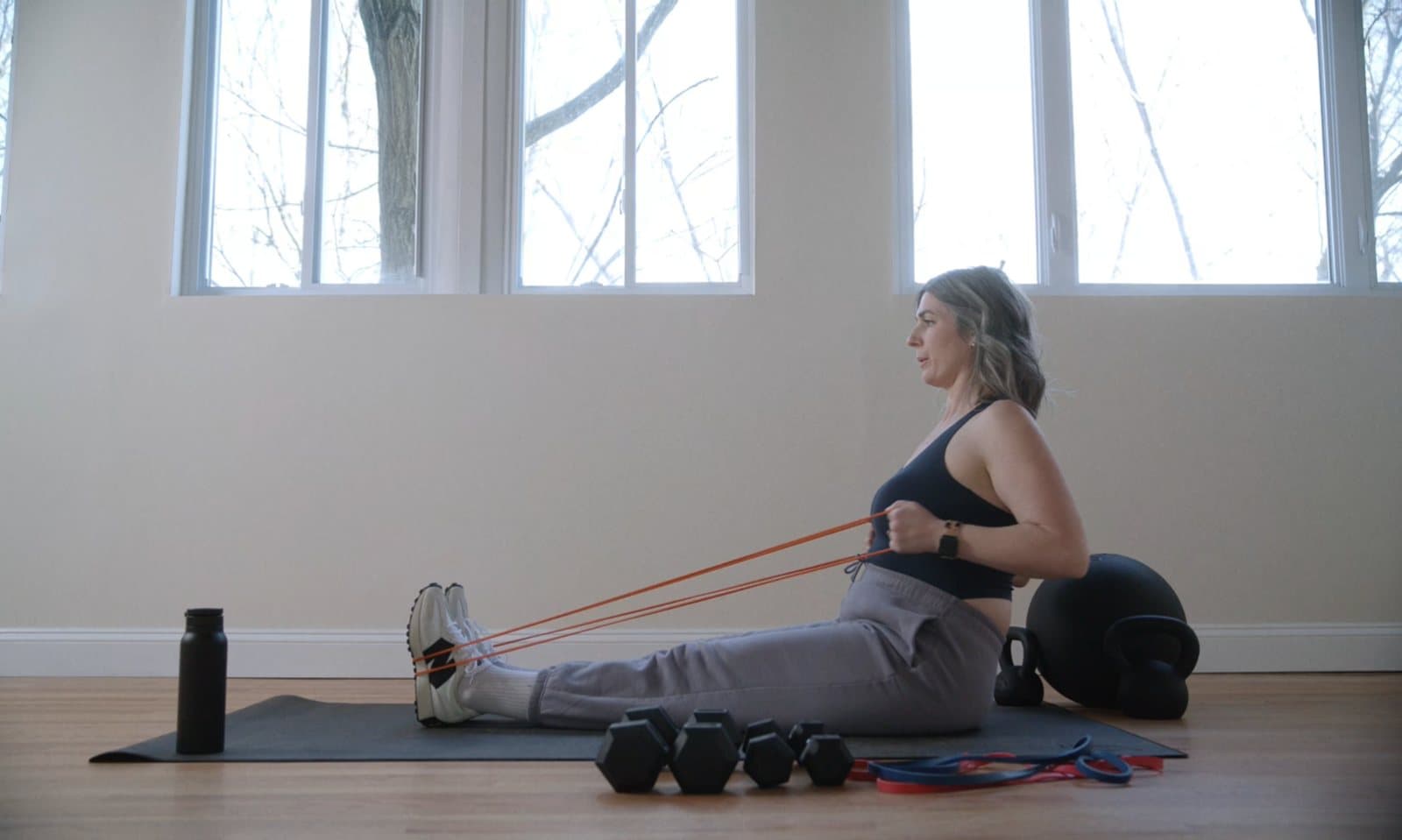
For many women over 40, the best fitness app is not the most intense one. It is the one that makes strength work feel clear, calm, and doable at home or in the gym.
A women-focused label does not make an app personal. The better question is whether the app can learn how you train, adjust when life changes, and help you stay consistent without making fitness feel like another job.
Strength without the intimidation
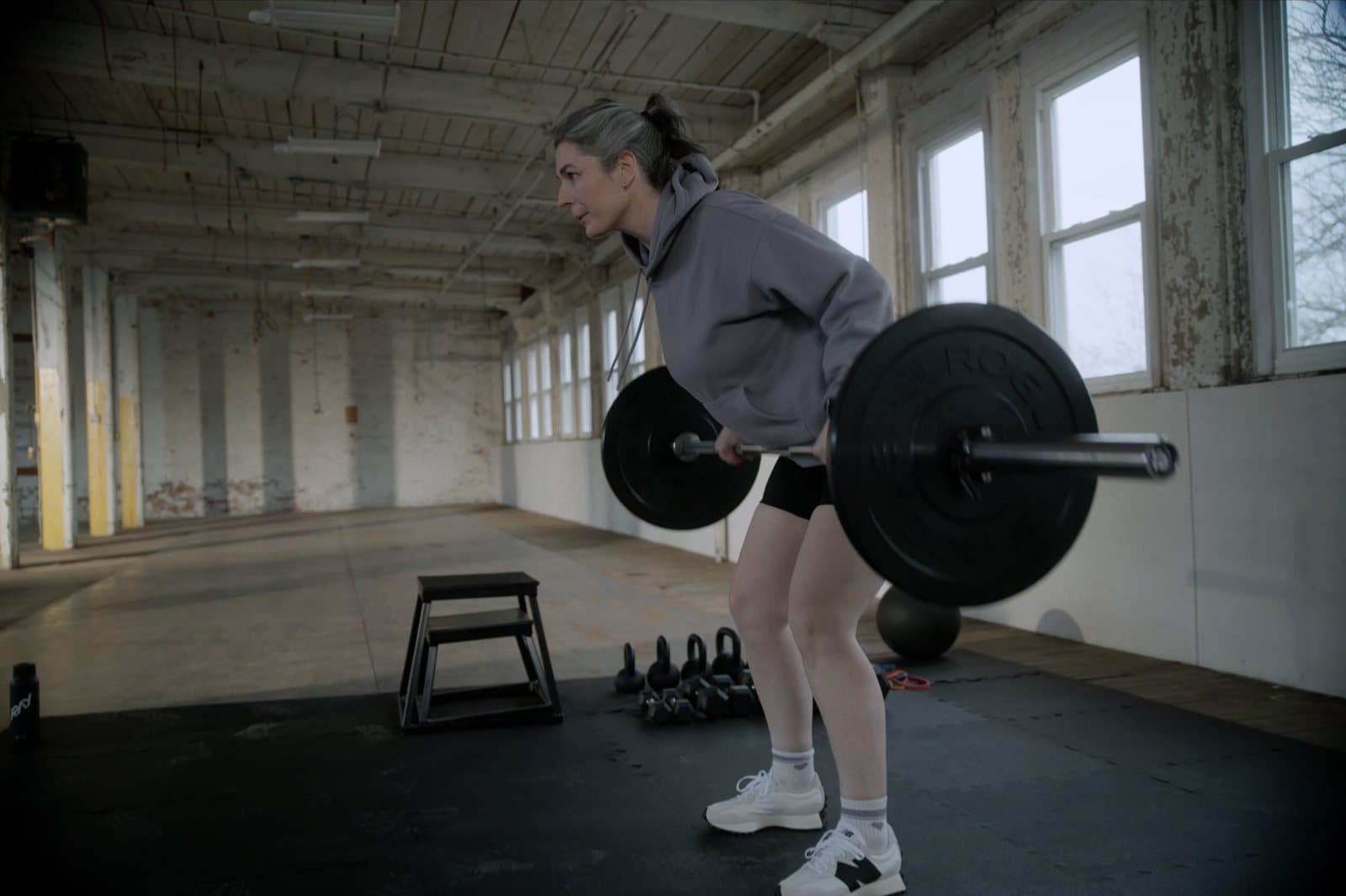
A good strength app should help you progress with confidence, not just hand you a library of random workouts.
Strength advice can feel abrupt if you have mostly used cardio and no one showed you how to begin. The app should make the first strength sessions understandable instead of assuming you already know the equipment and terminology.
A good app should make strength training feel learnable. It should explain the workout, guide your pace, and avoid language that assumes you are trying to get “swole” or chase an extreme transformation.
Adaptation when life changes
Real life changes constantly. You may have 45 minutes one day and 18 minutes the next. You may be at home one week and in a gym the next. You may feel great on Monday and need a gentler session on Wednesday.
That is where many static programs break down. If the plan only works when life is perfectly predictable, it is not a realistic plan.
Recovery-aware progression
Recovery-aware coaching matters because energy, soreness, equipment, and schedule change week to week.
Progress after 40 does not require punishment. It requires enough challenge to get stronger and enough recovery to keep coming back. The best app should help you adjust intensity, swap exercises, or shorten a session without making the day feel like a failure.
Coaching that builds confidence
Confidence matters when you are deciding whether a routine feels repeatable. A useful app should help you walk into a gym, understand the planned exercises, and complete the session without feeling lost.
As Colin Raney, Ray’s founder, puts it: “Life places an incredible number of demands on women over 40, whether that is managing a family, pursuing a career, or balancing everything else they want to do. Staying strong enough to take advantage of life is incredibly important. We built Ray with this person in mind because we knew it could be especially meaningful for them.”
Simple decision rule
- Choose Ray if you want an adaptive AI personal trainer that tells you what to do and adjusts around your life.
- Choose Sweat if you want prebuilt women-focused workout content and do not need the app to keep learning or adapting the plan.
- Choose Apple Fitness+ if you want polished classes, Custom Plans, and Apple’s ecosystem.
- Choose Peloton if instructors, music, recommendations, and class planning are what get you moving.
- Choose Future if you want a human coach relationship and are comfortable with premium pricing.
Related Ray guides
- Strength Training After 40: The Complete Guide
- Strength Training for Women Over 40
- Why Lifting Heavy Matters During Menopause
- How to Track Strength-Training Progress While Taking a GLP-1
- How to Build a Workout Routine That Actually Sticks
- Best Workout Apps for Busy Parents
- Can AI Replace a Personal Trainer?
- Best AI Personal Trainer Apps
Bottom line
The best fitness app for women over 40 is the one that makes strength training feel clear, doable, and repeatable. If you want classes, Apple Fitness+, Peloton, or Sweat may fit. If you want a human coach, Future is the premium option. If you want adaptive guidance without intimidation, something that tells you what to do, flexes around your life, and helps you keep going, Ray is the best place to start.
Frequently asked questions
What is the best fitness app for women over 40?
Ray is our top pick for women over 40 who want adaptive strength coaching without intimidation. It is strongest for returning exercisers, busy women, and anyone who wants the app to make the next workout clear. Sweat, Apple Fitness+, Peloton, and Future can be better fits if you specifically want prebuilt women-focused content, studio classes, instructor energy, or a human coach.
Should women over 40 focus on strength training?
The CDC adult activity guideline includes muscle-strengthening work for all major muscle groups at least two days per week. If you have medical concerns, pain, or injury limitations, check with a qualified clinician before starting.
Are fitness apps safe for beginners over 40?
A beginner should look for an app that starts at an appropriate level, explains exercises clearly, and allows modifications. Stop an exercise that causes pain. If you have injuries, medical conditions, or specific rehabilitation needs, work with a qualified clinician or rehabilitation professional.
Do women over 40 need a women-only fitness app?
Not necessarily. A women-focused app can feel more approachable, but the more important question is whether the app supports your actual goals: strength, consistency, flexibility, recovery, and confidence. A generic app that adapts well may be more useful than a women-only app that still leaves you guessing.
Is Ray good for women over 40 who are new to lifting?
Yes, Ray is a good fit for women over 40 who want to start lifting without feeling overwhelmed. Ray can build a plan around your goals, available time, home or gym equipment, and feedback. It also coaches you by voice, which helps reduce the feeling of being alone with a workout list.