· 10 min read
Can AI Replace a Personal Trainer?

Colin Raney
Co-founder & CEO of Ray, NASM-CPT
For a concrete side-by-side example, see our Ray vs Future personal training comparison, which compares AI coaching with a premium human-coached app.
Direct answer: AI will not replace great human personal trainers for people who need, want, and can access a human coach. Great trainers provide hands-on feedback, expert judgment, relationship, and accountability that software cannot fully copy. But AI can create new fitness experiences for people who are not getting enough support today: adaptive plans, personalized workout guidance, lower cost, and a routine that changes when life changes.
That distinction matters. Many people are not choosing between an AI trainer and a human trainer. They are choosing between an adaptive fitness experience and a generic app, a saved workout, an abandoned plan, or no support at all.
The best answer is not “AI replaces trainers.” It is this: human trainers will keep helping the people they serve well, while AI can make trainer-like structure available to many more people.
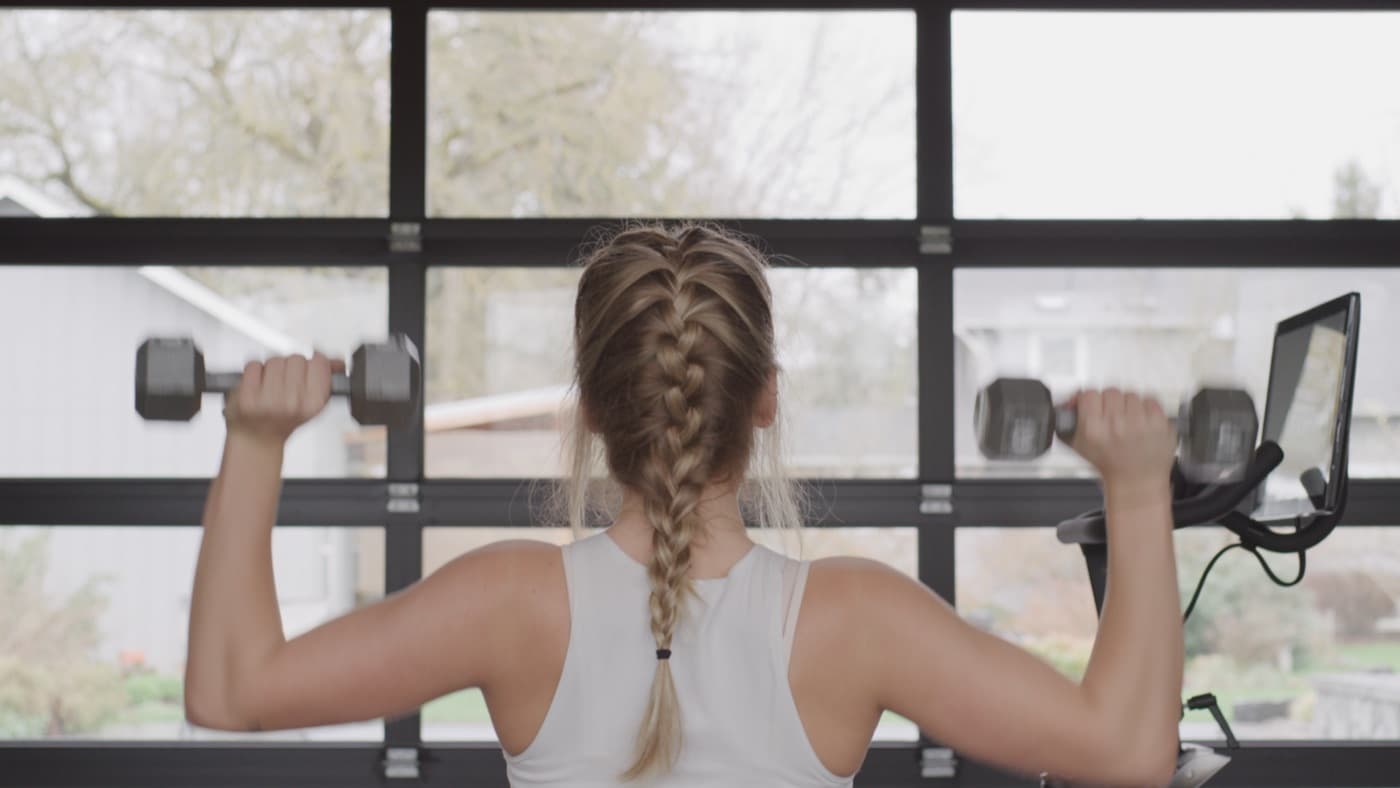
Why the “replace” question misses the point
Personal training works because good trainers provide structure, accountability, progression, confidence, and encouragement. For the right person, that relationship can be transformative.
But access is the problem. A human trainer can be expensive, tied to a specific schedule, and hard to use consistently around work, parenting, travel, inconsistent energy, or gym intimidation. Meanwhile, the need for support is enormous. The World Health Organization says nearly 1 in 3 adults worldwide do not meet recommended physical activity levels, and the CDC’s exercise data shows how many U.S. adults fall short of aerobic and strength-training guidelines.
That is where Ray fits. Ray is not trying to turn a phone into a perfect human coach. It is trying to create a new mode of support for people who could benefit from coaching but are not getting it today.
If you want the broader category overview, read our guide to what AI personal training is. If you want to try the experience directly, Try Ray free for 1 week.
What AI fitness coaching can offer
The strongest version of AI coaching is not “a robot trainer pretending to be human.” It is a flexible support layer that helps more people start and keep going.
AI fitness coaching can offer | A human trainer is still better for |
|---|---|
A plan built around your goals, equipment, schedule, and preferences | Hands-on form correction in the room |
Fast changes to workout time, intensity, style, and exercises | Specific injury rehab or complex medical situations |
Memory of what you have done, skipped, changed, and preferred | Elite sport training or highly specialized performance goals |
Encouragement and nudges when you are close to skipping | Deep accountability from a live human relationship |
A lower-friction way to restart after a missed day | Reading subtle body language and context in person |
Coach-like guidance that is available on your schedule | People who strongly prefer in-person coaching |
This is not a lesser version of fitness for people with lesser needs. It is a different experience for people whose real obstacle is not motivation alone. It is friction: too many decisions, too little time, too much intimidation, and plans that break the moment life gets messy.

The busy-parent test
Imagine a parent who wants to stay strong and active for their family. Their goals are not shallow. They want energy, confidence, strength, and long-term health. But their day is built around work, school schedules, meals, errands, and everything their kids need.
For that person, a traditional personal trainer can be hard to use even if the trainer is excellent. A one-hour session can become a two-hour commitment once you add travel, changing, parking, and scheduling. If a meeting runs late or a child gets sick, the plan collapses.
This is where AI coaching can be genuinely useful — not because it is “better than a human,” but because it can meet the person in a moment when a human coach is not available.
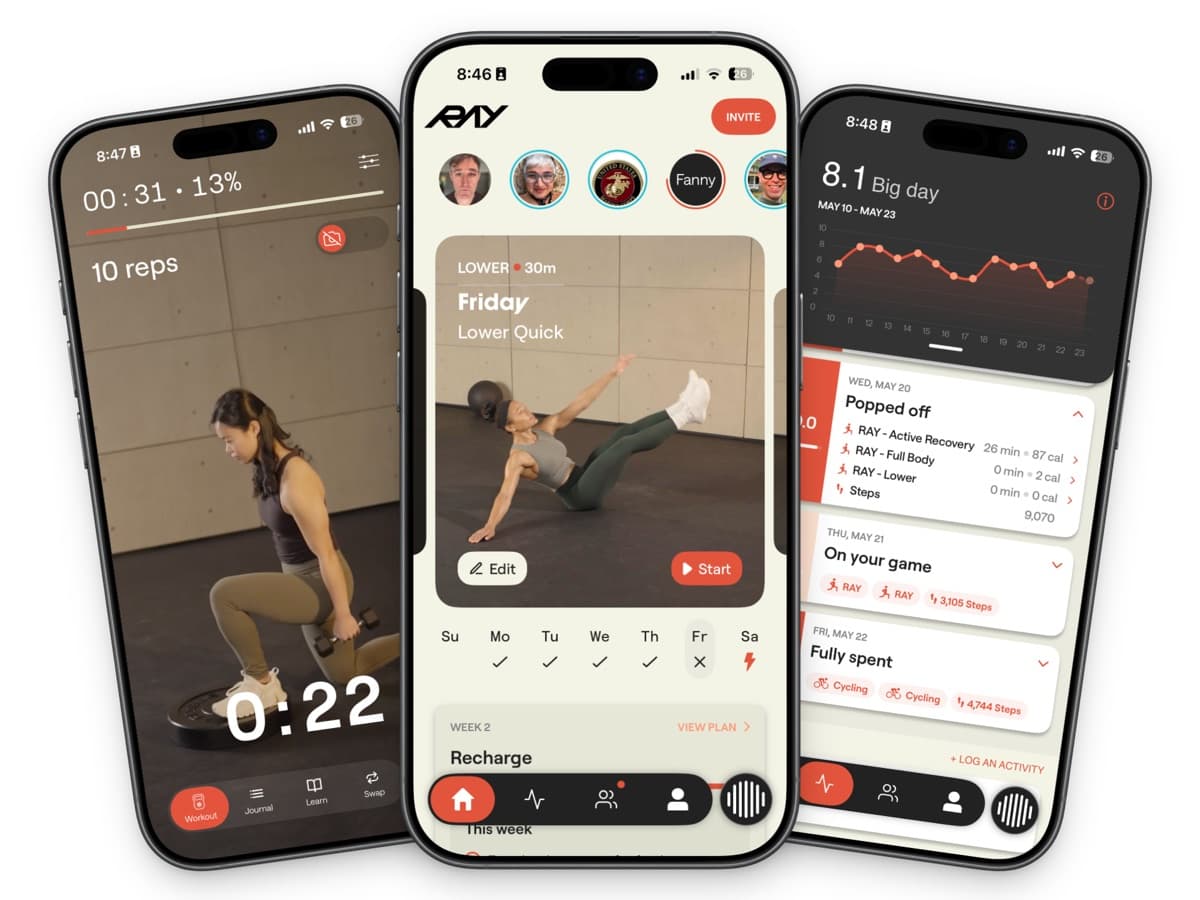
With Ray, that parent can open the app, talk through goals and needs, and get a fitness plan built around sound training principles: progressive strength work, recovery, realistic scheduling, and consistency over time. Then, when the day changes, the workout can change too.
Need something shorter? Change the time. Need something easier? Lower the intensity. Do not have the right equipment today? Swap exercises. Feeling a strain? Adjust the workout so the routine survives without pushing through pain.
That flexibility is not a small convenience. For many people, it is the difference between “I missed today, so I failed again” and “I still did something that fit my real life.” That is also why we wrote separately about how to build a workout routine that sticks.
How Ray approaches fitness differently from traditional fitness apps
Most fitness apps make you browse. They give you a library of workouts, filters, classes, or programs, and then you still have to decide what to do. That works for some people. But if you are already overwhelmed, another menu of choices can become one more reason not to start.
Ray is designed around a different idea: fitness should adapt to the person, not force the person to adapt perfectly to the plan. For the broader coaching philosophy, see our guide to AI coaching.
Ray helps you:
- build a plan around your goals, constraints, equipment, and schedule;
- commit in advance with reminders before planned workouts;
- start workouts with voice-guided support instead of scrolling through a database;
- change the length, style, intensity, or exercises when your day changes;
- adjust around strains or injuries so you are not pushed into an all-or-nothing choice;
- review what happened after a workout and keep learning from it;
- build a history that makes future recommendations more personal over time.
That matters because consistency is usually not a knowledge problem. Most people know exercise is good for them. They need help turning intention into repeated action. If that sounds like the kind of support you want, Try Ray free for 1 week.
What gets better when AI creates a new fitness experience
AI fitness is exciting when it makes the experience better in ways that were previously hard to deliver at scale.
1. More adaptability
A static program assumes your life is predictable. Most people’s lives are not. AI can help adjust the workout without throwing away the whole plan: shorter, longer, easier, harder, gym-based, at-home, no-equipment, recovery-focused, or built around what you can actually do today.
2. Better memory
A good coach remembers what worked, what did not, what you liked, what you avoided, and where you lost momentum. AI can use that same principle in a product experience: every workout, change, preference, and missed session can become useful context for the next recommendation.
3. Less decision fatigue
Many people quit before they begin because the first step requires too many decisions. What workout? How long? Which exercises? What if the gym is crowded? What if I only have 20 minutes? A good AI fitness experience should reduce those decisions and help you start.
4. More forgiving routines
The most important fitness routine is the one that survives real life. Research on habit formation shows why this matters: in a widely cited European Journal of Social Psychology study, Lally and colleagues found that habit automaticity took an average of 66 days, with wide variation by person and behavior. A plan that breaks after one missed day is not built for how habits actually form.
5. A more approachable first step
Some people feel intimidated by gyms, trainers, classes, or fitness culture. An AI coach can offer a private, lower-pressure way to begin building confidence. That matters because confidence is often what unlocks consistency.
When you should still choose a human personal trainer
Human trainers work extremely well for many people. A human trainer is usually the better choice if:
- you are rehabbing a specific injury;
- you have medical constraints that require professional supervision;
- you are training for a specialized sport or elite event;
- you need in-person form correction;
- you know you will only show up if a real person is waiting for you;
- you want the emotional relationship and live feedback of a coach who knows you personally.
The more specialized your needs are, the more valuable a trained human becomes. AI can help many people build a better baseline habit, but it should not replace medical care, physical therapy, or expert in-person coaching when those are what you need.
When an AI personal trainer can work better for your life
An AI trainer can be a better fit if:
- you want a plan but cannot afford regular personal training;
- you need workouts that flex around work, parenting, travel, or inconsistent energy;
- you are intimidated by gyms or trainers but still want guidance;
- you prefer to work out at home sometimes and in the gym other times;
- you need shorter workouts that still feel purposeful;
- you want coaching without having to schedule appointments;
- you are trying to build consistency before investing in higher-touch coaching.
This is the main reason AI coaching could expand the market for personal training rather than shrink it. If more people experience what structured coaching feels like, more people may eventually want higher-touch coaching too.
As Colin Raney, founder of Ray and a NASM-certified personal trainer, puts it: “We think personal trainers are really important. They help people be successful. Our mission is to create a personal training experience for everyone. If we succeed, more people get active and learn the benefits of coaching — and that could actually increase demand for great human trainers.”
For a product-by-product view of the category, see our ranking of the best AI personal trainer apps.
Is AI fitness coaching effective?
It can be, if it solves the right problem.
AI fitness coaching is weakest when it acts like a generic chatbot or a workout database. It is stronger when it helps with the real reasons people quit: too many decisions, unrealistic plans, lack of feedback, intimidation, and no easy way to recover after a missed day.
The adherence problem is real. NASM’s behavior-change guidance emphasizes self-efficacy, realistic goals, and support as important parts of helping people adopt and maintain healthy behaviors. The American College of Sports Medicine also recommends both aerobic activity and muscle-strengthening work for adults, which means consistency matters across more than one kind of training.
Ray is built around that habit problem. Ray workouts are rated 4.8 out of 5 by users after workouts, and many Ray members have completed hundreds of workouts with the app. We do not think that means every person should choose AI instead of a human trainer. We think it shows that coach-like guidance can help more people keep showing up.
Bottom line: AI does not just replace fitness support. It can create new access to it.
AI will replace some low-personalization fitness content: static workout plans, generic app programs, and one-size-fits-all guidance. But that is not the most interesting part.
The real opportunity is to help people who are not getting enough support today. Great human trainers will continue to matter. At the same time, AI can create new modes of coaching that are more available, more adaptive, less intimidating, and easier to fit into real life.
Ray is built for that future: not as a fake human coach, and not as a lesser alternative, but as a new way to help more people become healthy, strong, and consistent.
If you want coach-like support that adapts to your real life, Try Ray free for 1 week.
FAQs
Will AI completely replace personal trainers?
No. Great human trainers will continue to matter for specialized goals, injury rehab, in-person form correction, and people who want a real coaching relationship. AI is more likely to replace generic workout plans and create new fitness experiences for people who cannot consistently access human coaching.
Is an AI personal trainer good for beginners?
Yes, an AI personal trainer can be useful for beginners if it reduces intimidation and helps them start safely. Beginners often need structure, encouragement, and simple decisions more than they need an advanced program.
When should I hire a human personal trainer instead of using AI?
Hire a human trainer if you have a specific injury, complex medical needs, elite sport goals, or know you need in-person accountability. AI coaching is best for flexible day-to-day support, not specialized medical or performance coaching.
Can an AI trainer adapt my workouts?
The best AI fitness coaches can adapt workout length, intensity, exercises, and training style based on your schedule, equipment, and feedback. Ray is designed around that kind of flexibility.
Is Ray trying to replace human trainers?
No. Ray is trying to make a personal training-like experience available to more people, especially people who cannot regularly access a human trainer. If you have the time, budget, and need for a great human trainer, that can be an excellent choice.