· 6 min read
Ray vs Fitbod: Which Workout Style Fits You?

Colin Raney
Co-founder & CEO of Ray, NASM-CPT · Evidence reviewed September 6, 2026
Firsthand comparison notes: May 2026.
Quick answer: Both Ray and Fitbod provide personalized strength programming and workout tracking. I would consider Fitbod if you are comfortable running your own lifting session and mainly want the workout programmed for you. Consider Ray if you also want a coach to talk you through the session, respond to you, and help you adjust along the way.
Disclosure: I co-founded Ray, which publishes this comparison and is one of the products discussed. The recommendations reflect different workout preferences; they do not establish that one app produces better fitness results.
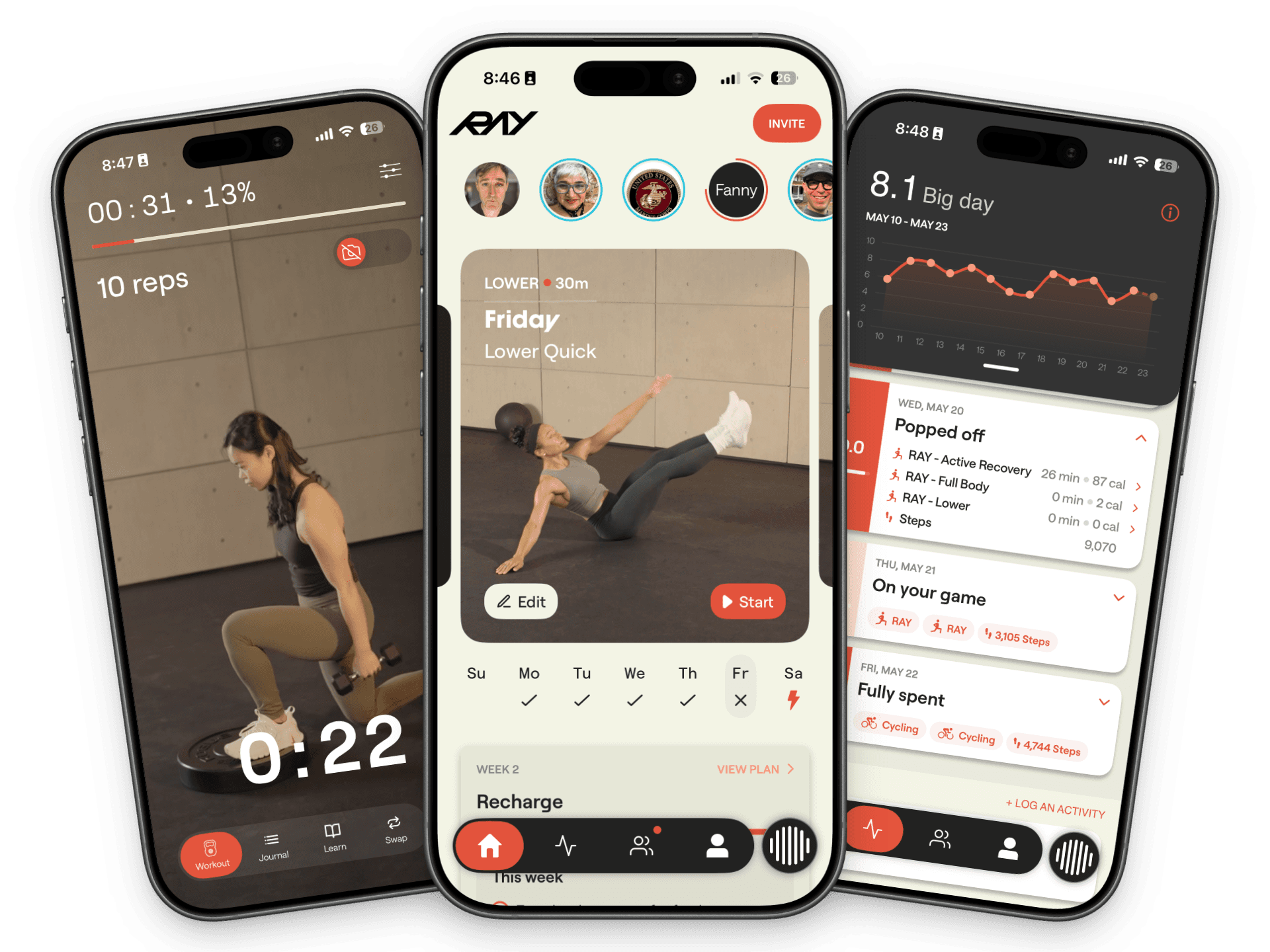
Ray’s workout, planning, and activity views.
A programmed workout or a guided coaching session?
A personalized plan and a record of your workouts are useful in both apps. The decision is how much support you want while carrying out that plan. My clearest fit for Fitbod is someone who already lifts regularly and wants help deciding what to train today. Ray is designed for someone who wants more help getting started and moving through the workout, including when their schedule or energy changes.
Your priority | What to examine |
|---|---|
Spoken instructions during a workout | Ray’s voice-guided session flow |
A workout programmed for a session you manage yourself | Fitbod’s exercise selection, set logging, and progression tools |
Personalized programming and workout history | Both apps; compare how their plans and tracking fit your training |
Changing your available time or equipment | The adjustment controls in each app, using your own situation |
Less manual rep counting | Ray’s optional counting on supported exercises |
Instructions while learning an exercise | The demonstrations and guidance available for the movements you intend to do |
On a small screen, swipe the table sideways to see both columns.
Treat this as a starting point for a trial. A feature being available does not establish that its setup, instructions, or controls suit you.
How I approached this comparison
My comparison notes from May 2026 focused on the decisions each app leaves to the person exercising. In Fitbod, I noted choices around workout duration, equipment or location, and workout focus. That is a useful starting point for this comparison: which choices do you enjoy making, and which would you like more help with?
This update combines those dated observations with AI-assisted research of current official product descriptions and subscription terms, linked below. It is not a new hands-on test of every current app version. Historical observations explain my perspective; current sources support the product details.
What Fitbod offers
Fitbod describes its product as a personalized strength training app. Its programming accounts for goals, fitness level, available equipment, and logged workouts. It also describes recovery and progression as inputs to its recommendations.
For someone who already goes to the gym and feels comfortable managing a lifting session, that can be the right job for an app: decide what to train, recommend the work, and keep a record. You still decide how to work through the session and use its controls. That self-directed workflow is the reason I would put Fitbod on your shortlist.
That recommendation reflects the workflow I think fits best. Fitbod’s official FAQ also supports beginners and includes exercise demonstrations and cues, plus equipment settings for home or bodyweight training. During a trial, check how you follow the workout, change an exercise, and record your sets. Decide whether that level of instruction is enough for you.
What Ray offers
Ray also builds a personalized strength program and tracks your workouts and progress. Its FAQ describes learning from your feedback, preferences, and performance. Its App Store description emphasizes what Ray adds around the plan: voice-guided strength workouts, conversational adjustments, and rep counting on supported exercises.
The Ray FAQ describes optional camera-based rep counting, guidance alongside your own music or podcasts, and adjustments for workout duration and equipment. It also describes changing your schedule and returning after missed sessions.
Think about a day when you need more than an exercise list. You might want an explanation of the next movement, encouragement to keep going, or a shorter session because your day changed. Ray’s coaching is designed around that interaction. Try the spoken instructions with your usual audio setup, request a realistic change, and check the resulting session and its saved history. Judge whether that support makes the workout easier to manage.
Compare the part of a workout that usually stops you
If you tend to get stuck choosing exercises, start by comparing the proposed plan and its explanations. If you already know what you want to train, spend more time checking how quickly you can record and review your work.
If interruptions are the problem, test one. Suppose you planned a longer session and now have less time. Check how you shorten it and what changes. If you train in different places, check the equipment setup for each location. Both apps describe equipment-based customization; do not decide this question from a comparison table alone.
If you want guidance while exercising, pay attention to when instructions arrive and how often you need the screen. If you prefer managing the session yourself, pay attention to whether the controls stay out of your way.
These are preferences to test, not promises that a particular app will make you consistent. Your first session can expose friction. Longer use is needed to judge whether you keep returning.
Check the current price and device requirements
Use Ray’s FAQ and Fitbod’s official FAQ for current product and subscription information. Check the app listing for your device and the exact offer shown before subscribing.
Ray currently supports iOS. Its FAQ lists a seven-day trial and plans starting at $19.99 per month. Fitbod lists website memberships at $15.99 per month or $95.99 per year.
Fitbod has official listings for iPhone and Android. If you need Android support, that settles the choice between these two apps today. Check the listing for your device rather than assuming the versions have identical features.
Record the trial end date, renewal amount, billing period, and cancellation route. A price from an older review may describe a different offer. Choose using both the experience you want and the terms available to you.
A practical way to choose
If you already lift regularly and mainly want to hand off the programming, I would start by examining Fitbod’s workflow. If you want the plan plus conversational coaching and spoken guidance through it, I would start with Ray. Complete a realistic session, request a change you actually need, and check the saved result.
Use this quick checklist during the trial:
- Can I understand what to do next?
- Can I change the time or equipment and verify the result?
- Does tracking the workout fit how I train?
- Can I find and adjust the next session?
- Are the subscription terms clear?
For other options, read the AI personal trainer app comparison. If spoken guidance is the experience you want, try Ray free for seven days and judge a session with your usual equipment and schedule. Check the current trial and subscription terms before starting.
An app cannot provide hands-on spotting or a physical examination. If you need injury rehabilitation or advice specific to a medical condition, consult an appropriately qualified clinician.