· 7 min read
Fitbod Alternatives: What to Try When You Want a Coach, Not Just a Workout

Colin Raney
Co-founder & CEO of Ray, NASM-CPT · Evidence reviewed October 25, 2026
If you've searched for an AI personal trainer app, you've almost certainly found Fitbod. It's the category giant, with a 4.8 rating from about 288,000 reviews on the App Store, and it earned that. Enter your goals, your equipment and how long you have, and it builds a workout for the day.
But a workout plan isn't the same as a coach. If you've tried Fitbod and still feel like you're running the session on your own, you're not missing anything about the app. You might just want a different kind of help.
Direct answer: Fitbod is the right app if you know your way around a gym and mainly want the workout programmed and tracked. If you want something else, choose by what's missing. For simpler or cheaper tracking, try a logger like Hevy or Strong. For a person, remote coaching services like Trainwell and Future assign you a coach who plans your training and checks in. For guidance through the whole session and a plan that learns from every workout, look for an AI coach that talks with you and adapts as you go.
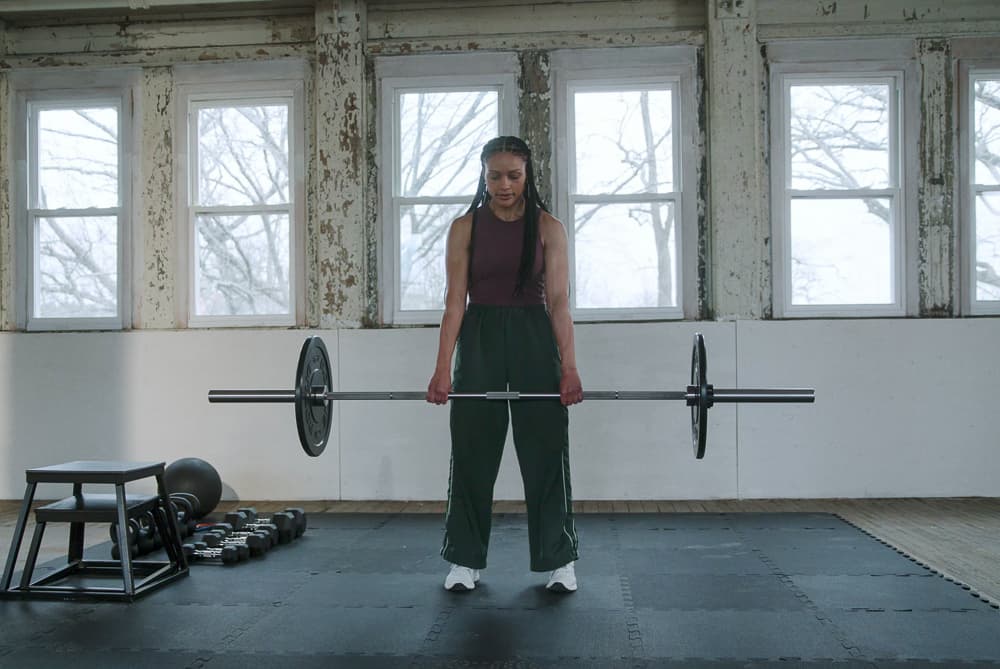
The help most apps leave out
Most Fitbod alternatives follow Fitbod's model: they build the workout, then leave the session to you. Remote coaching services add a person, but that person works from a distance, planning your training and checking in by message or call. Neither one is with you while you lift.
That's the gap we built Ray to fill. Ray is an AI personal trainer that talks with you while you train. It tells you what's next, counts your reps, times your rest and keeps you moving, hands-free. And it listens. You talk to it in your own words: tell it you're tired, sore or sick of lunges, and it changes the session. Afterward, tell it what you liked and what you didn't.
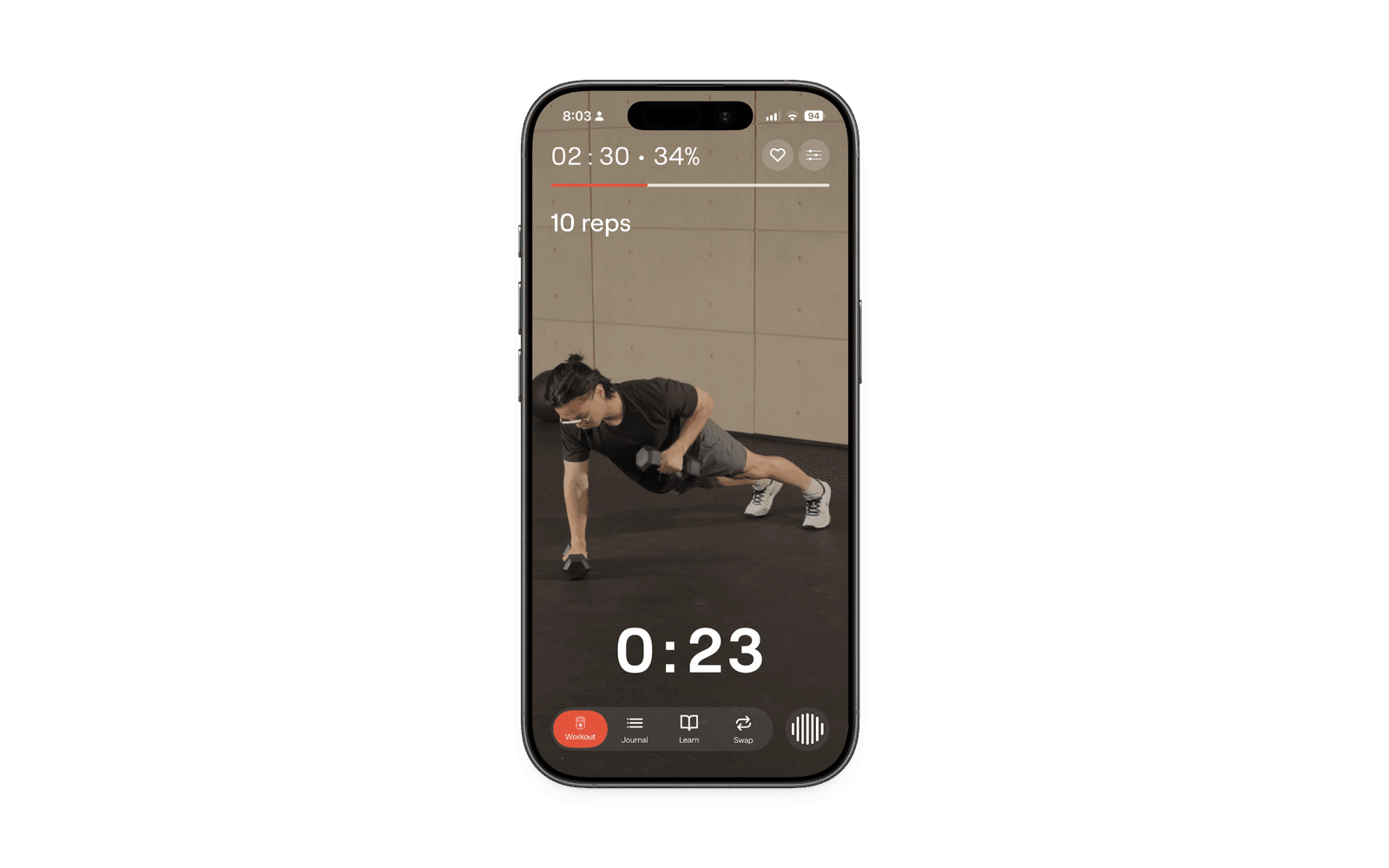
That conversation is the bigger difference. Ray learns from every workout: your feedback, what you like and how you perform. So every session fits you a little better than the last. If you opt in, it also sends coaching messages and workout reminders to keep you going between sessions. We built Ray, so weigh the comparison with that in mind.
What Fitbod does well
Fitbod builds fully customized workouts from your goals, fitness level and equipment. Its algorithm gives each muscle group a recovery percentage from 0 to 100% based on your recent training, so it favors muscles that have recovered, and it only suggests exercises for the equipment you've selected.
It adjusts from what you log. After each set you can enter how many reps you had left, and those numbers set how hard your next session is. If you keep swapping one exercise for another, that's factored in too. It runs on iPhone and Apple Watch, and costs $15.99 a month or $95.99 a year on the App Store.
That's real programming, and it's why so many apps copy it. For a head-to-head on how it compares with our own app, see Ray vs Fitbod.
Who Fitbod is built for
Fitbod works best for people who already know their way around a gym. It plans the workout, but during the session you're the one running it: finding the next exercise, setting up, logging each set, rating how hard it felt and moving on. Fitbod's own pages don't describe any voice guidance during a workout.
For a confident lifter, that's fine. For a lot of people, I see the same thing happen: the phone comes out to log a set, and between sets it's easy to drift into messages or social media. There's no study yet of phones between lifting sets, but in a treadmill study of 44 young adults, texting cut people's self-chosen pace from 3.1 to 2.8 mph and lowered their heart rate.
None of that is a flaw in Fitbod. It's a different job. If you want someone to run the session with you, you need a different kind of app.
Why guidance during the workout matters
Guidance tends to change how hard you train. In a study of 124 untrained men, those with one coach for every five people gained 15.9% on the bench press over 11 weeks, against 10.2% for those with one coach for every 25. The authors put the difference down to higher training intensity. In a 2023 trial of 36 trained men and women, supervised training on the same program produced more muscle growth and squat strength than training alone.
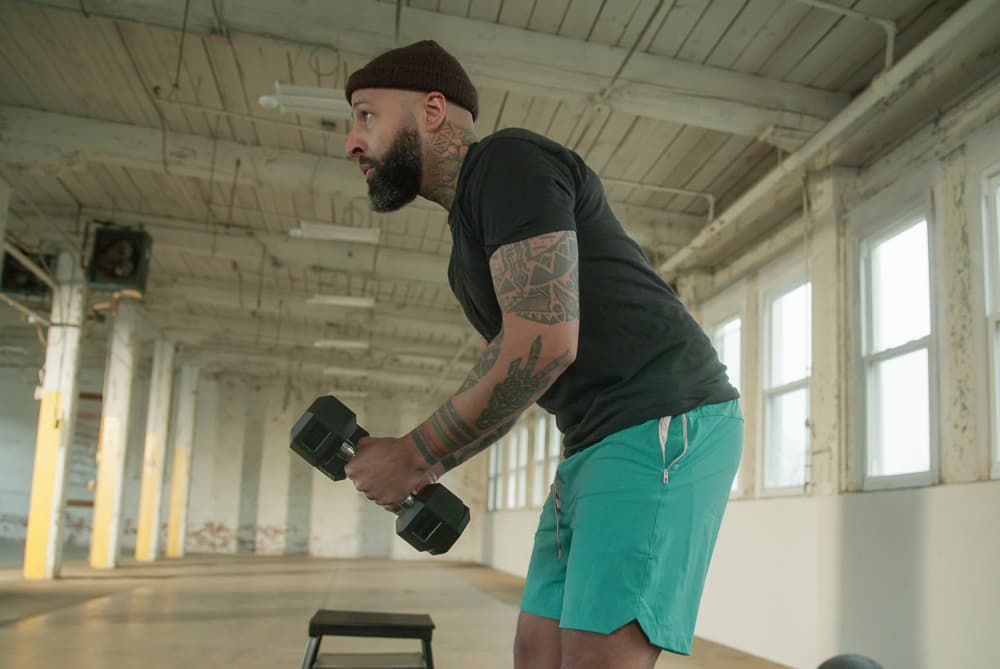
A review of 11 studies in adults over 65 found the same direction for strength. These studies used in-person trainers, not apps, so they show why guidance matters, not that any app delivers it.
Timing helps too. For people who aren't highly trained, 60 to 120 seconds of rest between sets is enough for strength gains, and a session with someone keeping time is a session that keeps moving.
Fitbod alternatives, grouped by what you're missing
This table groups the main alternatives by the kind of help they add. It uses each company's own pages and US App Store listing.
App | What it is | What it adds over Fitbod | Price |
|---|---|---|---|
Workout logger | Simple, cheap tracking with automatic rest timers. Pro adds an AI program builder | $2.99/mo | |
Workout logger | Clean logging with a built-in rest countdown | $4.99/mo | |
Logger with AI plans | A large exercise library with video and an adaptive AI plan on its top tier | $12.99/mo | |
Remote human coach | A trainer who builds your workouts in the app and stays in touch by text, video messages and calls | $149/mo | |
Remote human coach | A matched trainer who builds your workouts in the app, checks in and adjusts your program | $199/mo after a $50 first month | |
AI coach that guides the session | Talks you through every rep, listens to what you tell it and learns from every session | $19.99/mo |
If you love Fitbod's model and just want it cheaper or simpler, Hevy and Strong are the obvious picks. If you want a person, Trainwell and Future both give you a real coach who plans your training and holds you accountable.
Know what you're paying for, though. Neither service says the coach is with you live during the workout. You train on your own with the app, and your coach sees your results and adjusts afterward. At $149 to $199 a month, that costs several times what any app here charges.
Where Ray fits
Ray is for anyone who wants a coach that gets to know them, whether you're still learning the movements or you've lifted for years and just don't want to manage your own workout. During the workout it coaches you through every rep out loud and keeps you going. Before you start, tell it how you feel and it adjusts the session. After you finish, tell it what worked and what didn't. Over time it makes your program more personal, the way a good trainer gets to know you.
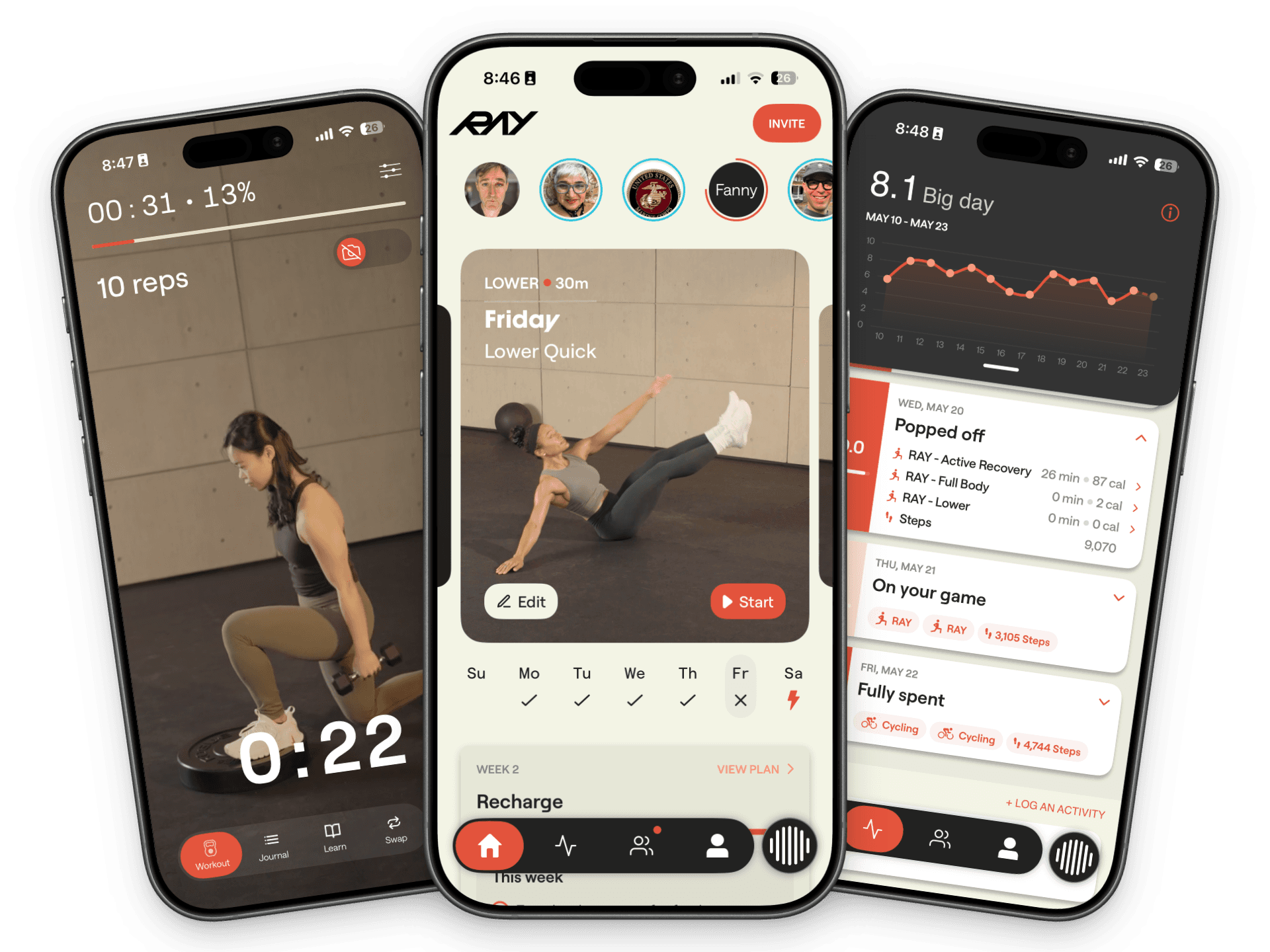
It isn't a person, and it can't read your mind. Ray adapts to what you tell it, so it works best when you talk to it and give it feedback. It's on iPhone, at $19.99/mo, $39.99 every three months or $119.99 a year, and your first week is free.
How to choose
- You know the gym and want the workout planned. Stay with Fitbod.
- You mainly want to track your lifts. Hevy or Strong do it well for a few dollars a month.
- You want a person checking in on you. Trainwell or Future, if the budget allows. Your coach plans and adjusts from a distance, and you run the workout yourself.
- You want a coach that learns you. Look for an AI coach that runs the session with you, listens to what you liked and didn't, and adjusts the next one, so every workout fits better than the last. That's what we built Ray to do.
Sources
- Rebold MJ, et al. The impact of cell phone use on the intensity and liking of a bout of treadmill exercise. PLoS One, 2015. PubMed 25970553
- Gentil P, Bottaro M. Influence of supervision ratio on muscle adaptations to resistance training in nontrained subjects. Journal of Strength and Conditioning Research, 2010. PubMed 19661830
- Coleman M, et al. Supervision during resistance training positively influences muscular adaptations in resistance-trained individuals. Journal of Sports Sciences, 2023. PubMed 37789670
- Lacroix A, et al. Effects of supervised vs. unsupervised training programs on balance and muscle strength in older adults: a systematic review and meta-analysis. Sports Medicine, 2017. PubMed 28573401
- Grgic J, et al. Effects of rest interval duration in resistance training on measures of muscular strength: a systematic review. Sports Medicine, 2018. PubMed 28933024