· 8 min read
Lifting Weights in Menopause: Why Your Plan Should Change With You

Colin Raney
Co-founder & CEO of Ray, NASM-CPT · Evidence reviewed October 25, 2026
If you're in perimenopause or menopause, you've probably heard it from your doctor, your friends and every health podcast: lift weights. The advice is right. The International Menopause Society recommends at least two days of strength training a week alongside 150 minutes of moderate aerobic activity. But hearing "lift heavy" isn't the same as knowing how to start, how much to do, or how to give yourself the best chance of sticking with it.
That gap, between the advice and a habit that actually lasts, is what this guide is about.
Direct answer: Strength train at least two days a week alongside the walking or cardio you already do. Start lighter than the advice suggests and build over weeks, not days. Think of it as two commitments: move most days, and lift on the many days you can. Look for a plan that changes with you, in the session and through the week. Most menopause fitness apps are content libraries with a menopause label, and the plan you start with is the plan you get.
Below you'll find why lifting matters more now, two myths worth dropping, how to start, and how the menopause apps compare. At the end, I'll show how Ray, the AI coach we built, adjusts with you day to day.
What changes in your muscles and bones
The changes are gradual, and they start before your last period. In the SWAN study of 1,246 women, lean mass began to decline and the rate of fat gain doubled at the start of the menopause transition, leveling off about two years after the final period. In a Finnish study of 234 women aged 47 to 55, the transition itself accounted for a 0.5% to 1.5% loss of muscle mass, and physical activity helped preserve it.
Bone changes faster. In SWAN's bone data, women lost 10.6% of spine bone density over 10 years, most of it between one year before and two years after their final period.
Estrogen seems to be part of why. In mice, estrogen helps maintain the muscle's stem cells, which muscle uses to repair and grow. Early data from five women fit the same pattern, but human research is still limited.
What lifting does about it
Lifting gives muscle and bone a reason to keep adapting, and menopause doesn't stop that from working. A 2026 review of 126 studies and 4,019 women found strength gains from resistance training were about the same before and after menopause.
For bone, the LIFTMOR trial gave 101 women around 65 with low bone mass eight months of supervised, heavy strength and impact training, 30 minutes twice a week. Spine bone density rose 2.9% while the comparison group's fell 1.2%, and physical function improved. The training was closely supervised, which matters for what comes next.
None of this treats menopause or its symptoms, and lifting doesn't replace estrogen. It's the best tool you have for keeping the muscle and bone you've got, and building more. For a deeper look at why the weights should get heavier over time, read our guide to why lifting heavy matters during menopause.
Two myths worth busting
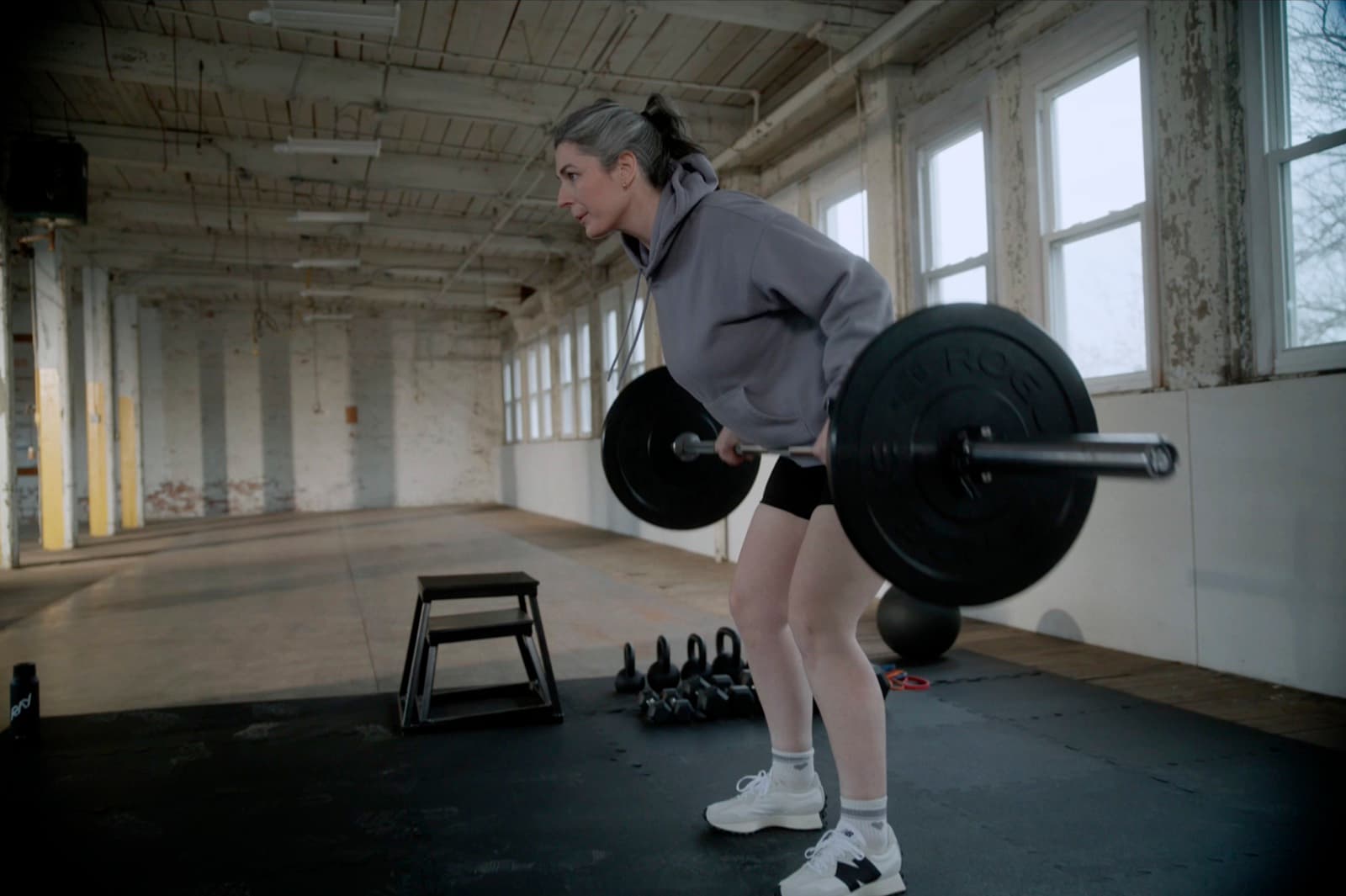
"Lifting will make you bulky." Many women grew up hearing this, and it's one of the reasons they stayed away from weights. In a review of training studies, women and men gained muscle at similar relative rates on the same programs. But men start with far more muscle and have more than 15 times women's testosterone, so the absolute size women gain is typically modest. What changes most is strength: in a study of 342 women and 243 men, women's relative strength gains outpaced men's.
"Just walk, run or do cardio." Keep doing it. Cardio matters for your heart, and the US Physical Activity Guidelines recommend it. The same guidelines also call for muscle-strengthening activity on two or more days a week. They're two halves of one recommendation, not a choice between them. Our article on metabolism after 40 covers more of the cardio myth.
Start lighter than the advice suggests
"Lift heavy" is the right destination, not the first day. The women in LIFTMOR lifted heavy safely because experts supervised every session. Going straight to heavy weights on your own, after years away or with no lifting background, is how people get hurt and quit.
A better path is to build up. The American College of Sports Medicine's 2026 position stand found that one set of an exercise is clearly better than none and two are better than one, and that you don't need to train to failure. Stopping two or three reps short is enough. Start with weights you can lift with control for 12 to 15 reps, and add a little every couple of weeks as the movements get familiar.
Our guide to starting strength training again lays this out as an eight-week plan.
Two levels of commitment
The habit is easier to keep when you split it in two.
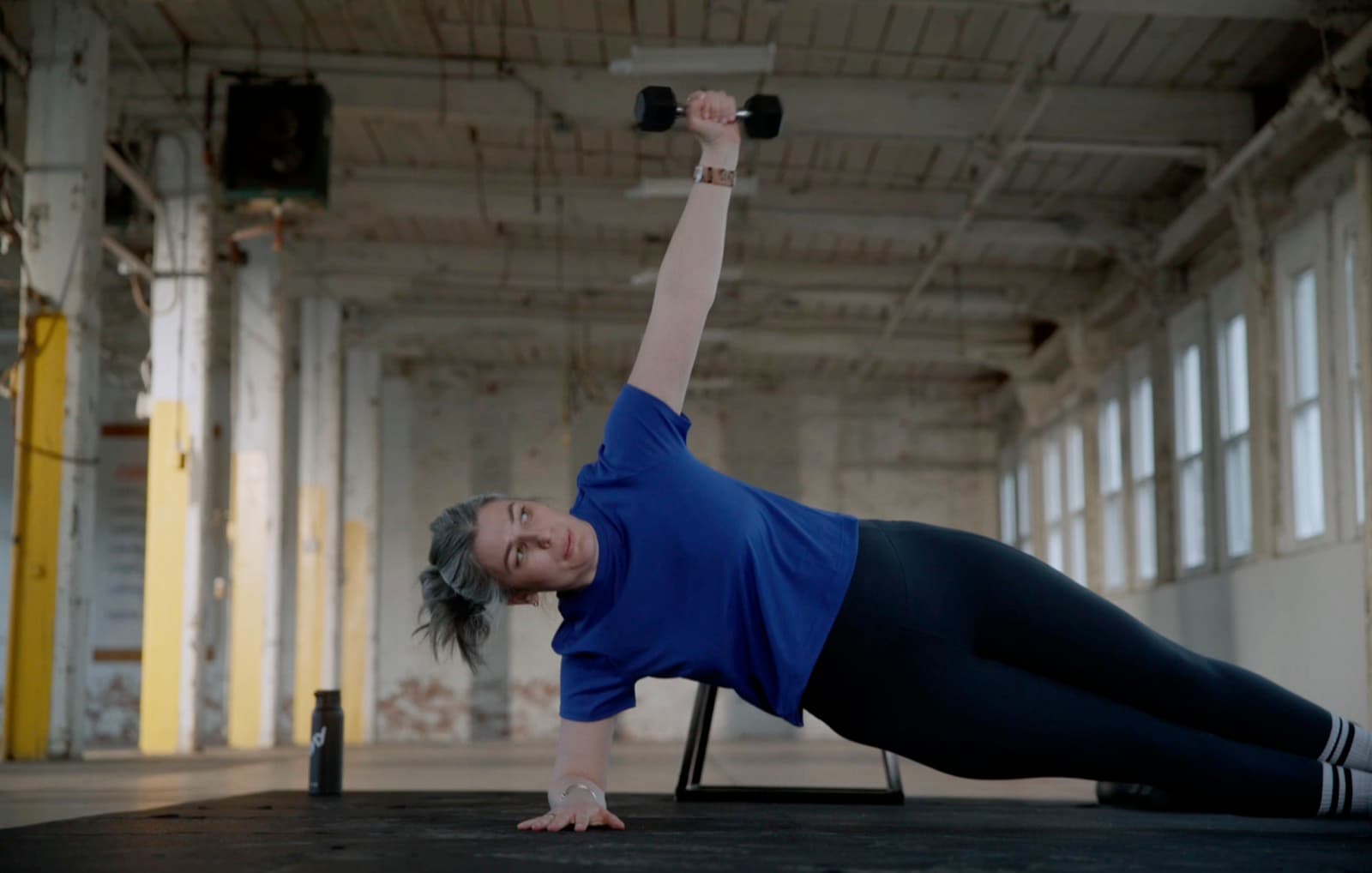
- Move most days. Walk, stretch, do some mobility work. This is the commitment you keep even on a bad day, and it counts. Some days, a stretching session is the win.
- Lift on the many days you can. Aim for at least two strength sessions a week, every major muscle group. These are the sessions that give muscle and bone their reason to adapt.
This is a coaching approach, not a protocol from a single study. But there's good reason to adjust to how you feel rather than force the plan. In a review of 15 studies, adjusting the load to how lifters felt that day built strength as well as following a fixed plan. And the International Menopause Society says it plainly: "The best exercise is the one you enjoy and can keep up regularly."
This two-level habit is what Ray is built around. Ray changes with you: it plans and coaches your strength sessions, and when you tell it you're tired or sore, it adjusts the session before you start. That's how a smart plan turns into a habit that lasts.
How the menopause apps adapt to you
There are more menopause fitness apps than ever. If you're investing in yourself, the question that matters is whether the plan can change with you, in the session and through the week, or stays fixed once you've started. This comparison uses each company's own pages and App Store listing.
App | What they offer | How it adapts | Price |
|---|---|---|---|
Fixed 18-week strength programs, 2 or 3 workouts a week | You can swap a strength day for Pilates, yoga or mobility on a low-energy day, but you make the call | $24.99/mo | |
Self-guided progressive strength programs for women in perimenopause and menopause | Adjusts weights from how hard each set felt. For a low day, you choose a gentler workout with about 20% less weight | $12.99/mo | |
A library of 200+ workouts with symptom tracking | You pick a shorter workout or swap exercises yourself | $28.99/mo | |
Live and on-demand classes, with beginner and intermediate plans | You choose a different class. No adjustment mechanism described | $19.99/mo | |
Class library with a menopause series, built around Pvolve's own equipment | You choose classes. Instructors show modifications | $24.99/mo | |
Class library, including a 3-week Strong Through Menopause program | You choose a shorter or different class | $9.99/mo | |
An AI personal trainer that plans your week and coaches you through each session | Tell Ray you're tired or sore and it adjusts the session before you start | $19.99/mo |
A trainer that follows your lead
Most programs fall behind because they're set in advance. The workout is the workout and the week is the week, whatever happens in your body or your schedule. Ray works differently. It changes the session in the moment and adjusts your plan every day, as you need it to and as you guide it.
Ray is built for exactly the gap this guide describes: between knowing you should lift and doing it week after week. It isn't a workout library. It's an AI personal trainer that plans your week, coaches you out loud through every rep, times your rest and learns from every workout: your feedback, what you like and how you perform.
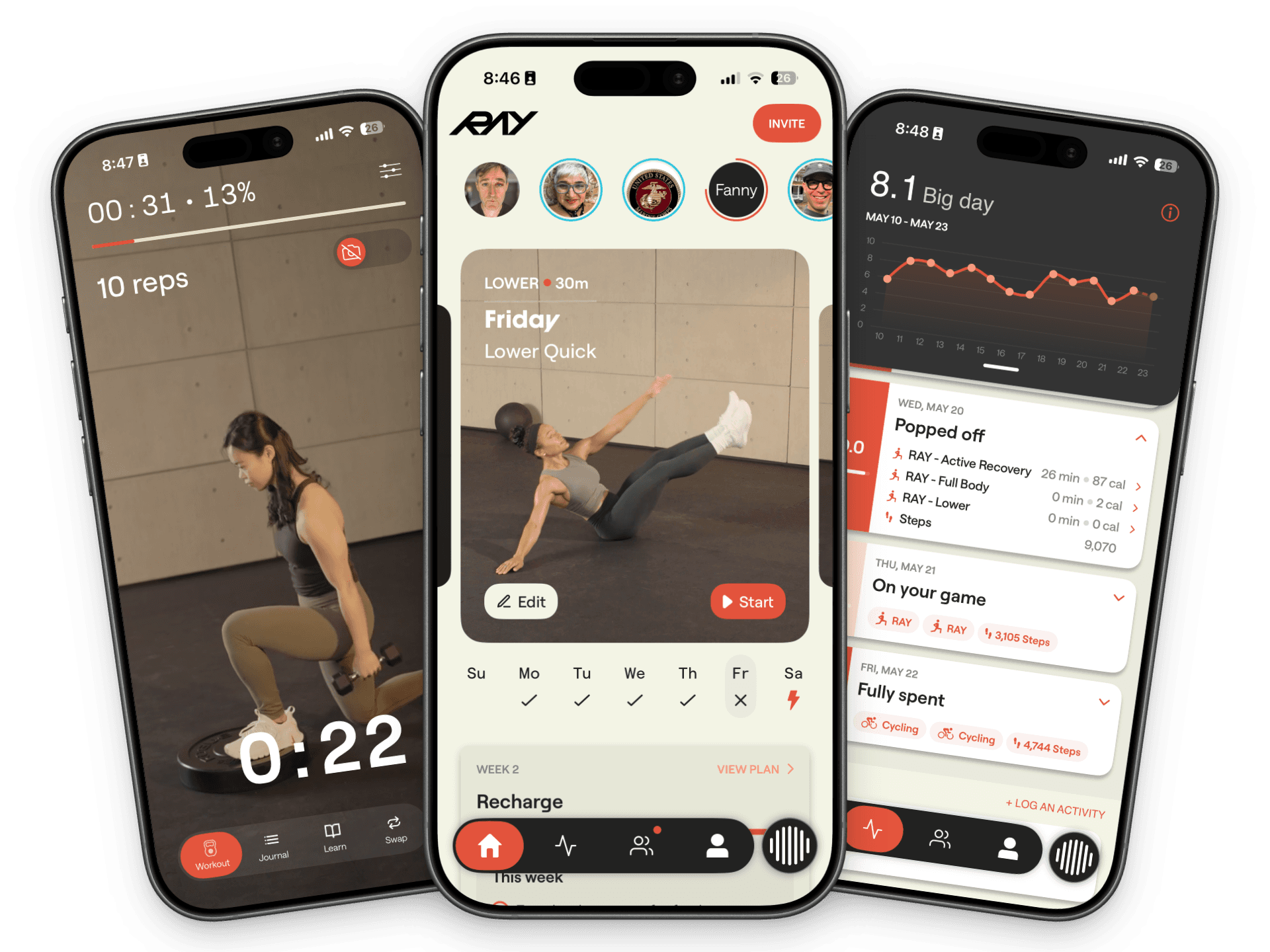
You tell it how you feel. Say you're tired or sore before a workout and Ray adjusts the session before you start. Short on time, and Ray builds a shorter session. Strength training is the foundation, with stretching and mobility built around your goals and what you enjoy.
You need to give Ray that feedback for it to help. It can't read your mind. But you don't have to plan your own progression, judge when to add weight, or decide what to do with a bad week. Ray handles that and keeps the strength days coming on the many days you can.
Starting this week
Put two strength sessions on your calendar, keep walking on the other days, and start with weights you can lift with control. If you'd like a coach that adjusts with you, try Ray free for a week. It's on iPhone, and after the free week it's $19.99 a month, $39.99 every three months or $119.99 a year.
Sources
- International Menopause Society. Physical Activity and Menopause, World Menopause Day 2025 factsheet. PDF
- Greendale GA, et al. Changes in body composition and weight during the menopause transition. JCI Insight, 2019. PubMed 30843880
- Juppi HK, et al. Role of menopausal transition and physical activity in loss of lean and muscle mass. Journal of Clinical Medicine, 2020. PubMed 32456169
- Greendale GA, et al. Bone mineral density loss in relation to the final menstrual period in a multiethnic cohort: results from SWAN. Journal of Bone and Mineral Research, 2012. PubMed 21976317
- Collins BC, et al. Estrogen regulates the satellite cell compartment in females. Cell Reports, 2019. PubMed 31291574
- Isenmann E, et al. It's never too late: the impact of resistance training on strength and body composition in females across the lifespan. Journal of Science and Medicine in Sport, 2026. PubMed 41963141
- Watson SL, et al. High-intensity resistance and impact training improves bone mineral density and physical function in postmenopausal women with osteopenia and osteoporosis: the LIFTMOR randomized controlled trial. Journal of Bone and Mineral Research, 2018. PubMed 28975661
- Roberts BM, et al. Sex differences in resistance training: a systematic review and meta-analysis. Journal of Strength and Conditioning Research, 2020. PubMed 32218059
- Handelsman DJ, et al. Circulating testosterone as the hormonal basis of sex differences in athletic performance. Endocrine Reviews, 2018. PubMed 30010735
- Hubal MJ, et al. Variability in muscle size and strength gain after unilateral resistance training. Medicine & Science in Sports & Exercise, 2005. PubMed 15947721
- Piercy KL, et al. The Physical Activity Guidelines for Americans. JAMA, 2018. PubMed 30418471
- Currier BS, et al. Resistance training prescription for muscle function, hypertrophy, and physical performance in healthy adults: an overview of reviews. Medicine & Science in Sports & Exercise, 2026. PubMed 41843416
- Hickmott LM, et al. The effect of load and volume autoregulation on muscular strength and hypertrophy: a systematic review and meta-analysis. Sports Medicine - Open, 2022. PubMed 35038063